Ruth Bader Ginsburg reportedly died at her home, surrounded by family. But she very well could have died at her desk. She could have been alone, reading a brief, slumped over until a housekeeper found her. She may have died at home but she worked to the death.
A very small part of me is impressed and inspired by her work ethic, fortitude, and grit. But most of me is overwhelmingly sad. She never had a retirement, or time to relax, or a moment to rest. Her last pleas were to her granddaughter to prevent her replacement until after the election. She worked through her cancer. She worked through her chemotherapy. She worked to her death.
In some ways, she was very lucky. Despite the odds, she broke barriers and made it to the very top of her field. She had a supportive family that cared about her. She had plenty of money and access to abundant resources. She clearly believed in what she did. But in working to her death, she shared the all too common, and often unchosen, fate of many Americans.
Millions of people work to the death. They have no choice. Some after going bankrupt from medical bills. Some have their retirement funds decimated during recessions or pandemics and never receive a corporate bailout. Some never managed to save for retirement because they had to work three jobs to put food on the table. Unlucky. Vulnerable. Powerless.
Ruth Bader Ginsburg had enormous, monstrous, heavy, lifetime appointed power. By the end of her life, she was no longer just a woman, but a symbol of fairness, resistance, and dissent. She had a cult following of adoring fans. Her likeness made it on to pins, shirts, and tote bags. She was a shield against a packed partisan court that would fail to check or balance our partisan government. She could not rest because shields do not rest. Defensive, stoic, steadfast, harsh metal, not breathing, not feeling, not living, not dying. She had to be more than her desires and beliefs. The power of her role demanded it. She seemed to handle this with grace, with joy, but she wouldn’t have been able to show us anything else. Her role on the supreme court, her role as a symbol of justice, her public life as a symbol of defiance, demanded nothing less than the grace and joy she showed us. It was an enormous burden.
Power is a dangerous thing to bestow. It does not just corrupt, it distorts. It distorts how we see each other. It distorts our ambitions and can change our goals. We forget who we wanted to be. Power distorts our intentions and replaces our motivations. We forget why we were doing this. Power distorts our moral compass. The arrow spins around and around and no one knows where north is anymore. We can temper this distortion with vigilance, but it’s an uphill battle.
The supreme court was not always the way it is now. It was shaped by time and people. It has changed size, purview, and power. It’s not a cornerstone of our democracy, but instead a pile of loose judicial gravel between two crumbling executive and legislative pillars. The Supreme Court is not supposed to legislate, but when the legislative process becomes mired in corporate lobbyists and partisan bickering, the only way to create change or progress is through the bench, through the eyes of the constitution. A random number of unelected people should not have lifelong power to make decisions for us. But our government and our democracy is very fragile. The glorious checks and balances only work if people respect them. If people play by the rules. But no one can force them to.
In the wake of Ruth Bader Ginsburg’s death, many have lamented the political partisanship regarding her replacement. On one hand, in 2016, eight months away from a presidential election, when the executive and legislative branches were held by different political factions, the legislative branch did not even vote on a supreme court candidate. They just let the nomination expire. Now, six weeks from a presidential election, when one political faction controls both the executive and legislative branches, the Senate will vote on whatever Il Duce puts in front of them. Most folks seem to be upset that the Republican party refuses to follow its own precedent and instead makes up new rules as it goes along. Some folks are frustrated that the Democrats are only griping because they aren’t in power. Nah nah nah nah boo boo. You lost.
Power. Who decided that a career politician from Kentucky, who was elected by 0.24% of Americans, can do whatever he wants? Who decided that political factions can do away with our fragile rules and delicate precedents and comical checks and balances, so long as they have absolute power? Who decided that anyone should ever have absolute power?
No one decided this. We’ve all been making it up as we go along. All of the founding documents we love to cite were written very quickly by a bunch of flawed, well meaning, white men, in a dusty room lit by candlelight. We’ve already amended one of them thirty-three times! Stop acting like the Constitution is a magical map to patriotism and start treating it like buggy computer software that needs an update every so often. Politics is not a game of winners and losers, it’s a brittle experiment in collective action. Can we all overcome our lizard brain urge to win and conquer and control? Can we come together to take care of eachother?
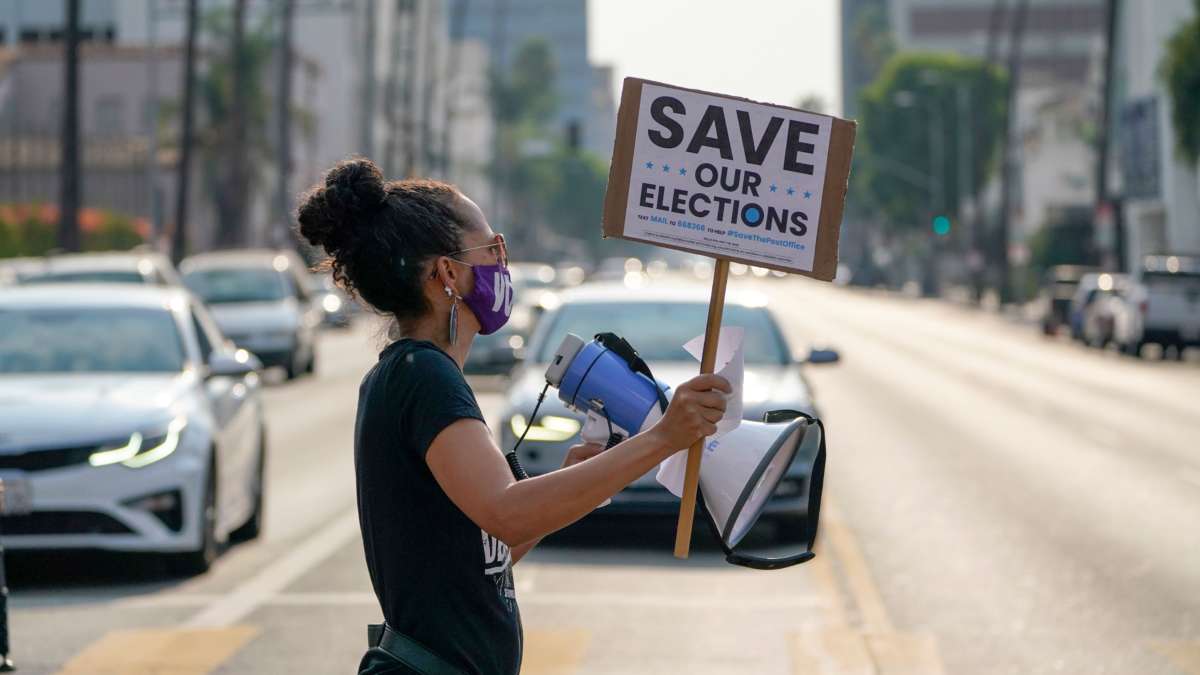
Power has corrupted and distorted our values and our goals. Donald Trump is so scared of losing his power that he continues to claim that he may not honor election results or peacefully transition power. This is our most basic norm and precedent. This is the thing that our heroes gave their lives to preserve. Freedom. Democracy. But they are not inviolable truths. They are breakable norms. No one can make our politicians follow the rules. No one but us.
This is not about winning. We are not fighting to win. We are fighting for folks who don’t make enough to save for retirement, folks who have to work through their cancer treatments, folks who work to the death. We are fighting for fairness, equal opportunity, the American dream. We’re fighting for each other. We are choosing democracy.
So how do we do it? Protesting. Voting. Talking. Planning. Hoping.
Here is a guide, to hopefully prevent, or if necessary, defeat a coup. It is possible for a coup to happen in the United States. It is possible that someone will stop counting votes, that they will refuse to honor the election results. That’s scary. The good news is that there is no reason to panic. We’ve been looped into the secret early. We can calmly plan ahead and come together to insist every vote is counted in our election. We can choose democracy. Seriously, read the guide.
This country won’t die. At least not without a fight.
Want to make the pledge to choose democracy? Join me here.



I agree with most of what you said about the erosion of our political way of life; I’ve said much the same thing in my own blog: http://jayeltee.blogspot.com/2020/09/on-ruth-bader-ginsburgs-death.html
But I don’t think your characterization of Justice Ginsburg was accurate. She was a wielder of power, but never a slave to it. She worked because that was one of the defining features of her character. She worked hard up until the end for the same reason that writers write up to the end, that composers compose up to the end — because she liked the task and always found new ways to do it. Like most creative people, she always felt that her life-work was a work unfinished, and there would always be something more to say or to do. I don’t think she would have wanted it any other way.
As for her becoming much more than just a woman in the eyes of society, it didn’t seem to affect her much; she regarded it with amusement. It may have been more of a distraction to her than anything else, but she seemed to enjoy those moments working out with Stephen Colbert or talking with her many interviewers. I don’t think that power really distorted her life, only our perceptions of her life.She floated above it, doing what she did not only because she had to do it, but because she wanted to do it. She found purpose in it, the way you find purpose in medicine.
What I take from her is the image of the Happy Warrior, like Hubert Humphrey or Molly Ivins or Pete Seeger was.They sought justice, but never let their setbacks discourage them from joyfully going back into the fight for it.
LikeLike
You’re right that I don’t know what kind of life she wanted at the end. I watched the interviews with her. But I didn’t know her, just her public image. Her pleas to her granddaughter to ensure she was not replaced until after the election are sad to me. I have a passion for many things but hope I do not work to the death. I will think and write and do to the death, but not work. I think our commitment to unyielding productivity can be harmful.
I did not intend to imply that she herself was corrupted by power, but that power distorted the role she played in history. The sheer weight of her role, of any lifetime appointment to the supreme court, the immense power, distorts the job. The work. Her burden shouldn’t have been that large, even if she enjoyed it. It’s an untenable system.
My piece was supposed to be less about her and more about the weak protection our government affords to absolute power.
Perhaps I’ll make some edits to clear that up.
LikeLike
Also, I read your blog, don’t worry!
LikeLike